
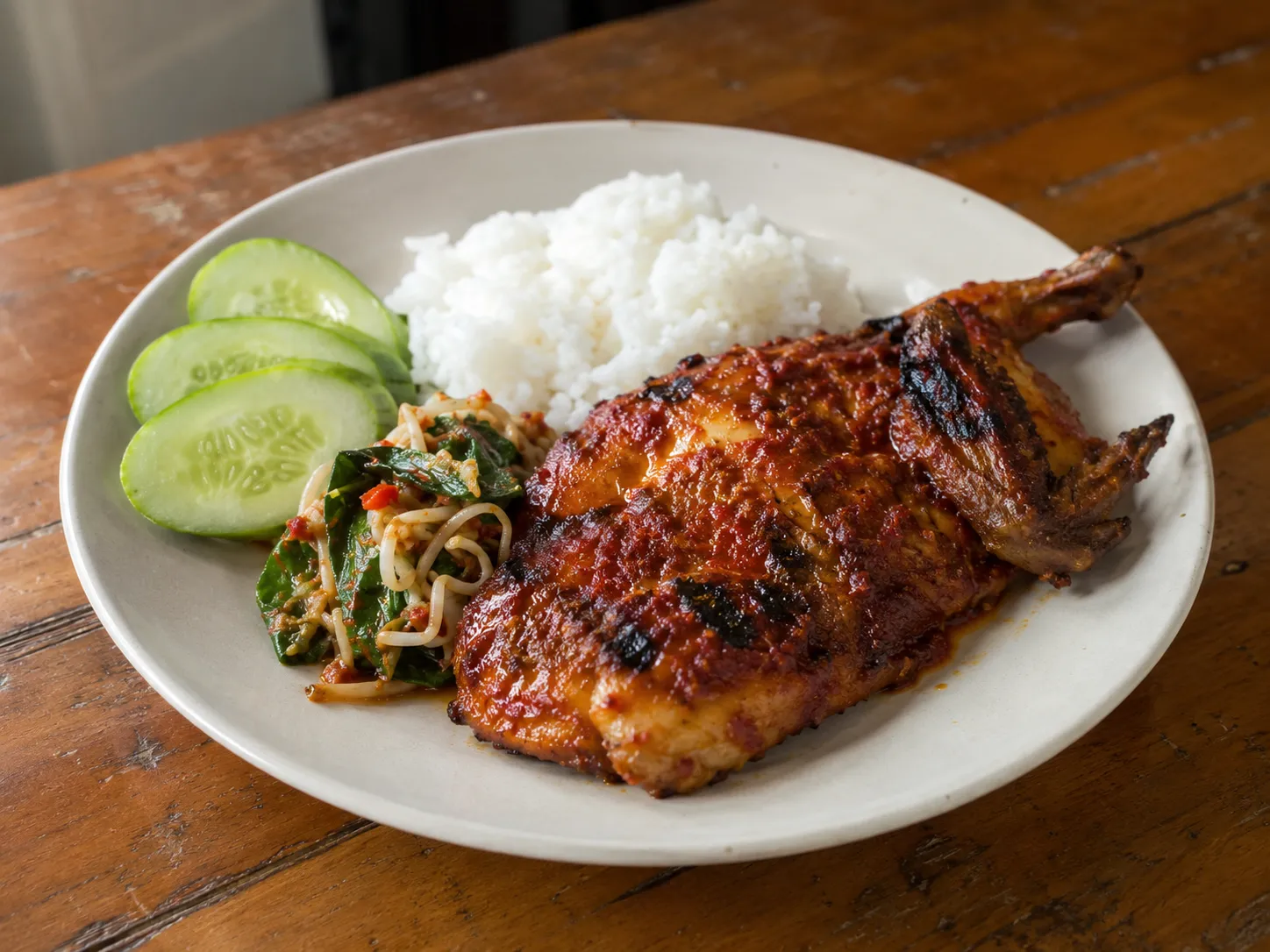
Ayam Taliwang: The Story and Recipe Behind Lombok’s Famous Spicy Chicken
Ayam Taliwang is a Lombok-style grilled chicken coated in a hot, savory sambal built from chilies, shallots, garlic, tomato, kencur, and shrimp paste. Its name carries a connection to the Taliwang community, while its culinary identity was shaped in Lombok. Today, it is one of the essential dishes to seek out when traveling through Lombok or the nearby Gili Islands.
This guide is for curious travelers and home cooks who want more than a list of ingredients. It explains the sometimes-confusing Ayam Taliwang origin, gives you a simplified recipe that works in a home kitchen, and shows you how to recognize a satisfying version when you order it on your trip.
Ayam Taliwang at a Glance
What it is
Chicken grilled or roasted with a spicy red sambal and a lightly smoky finish.
Where it belongs
A signature of Lombok and Sasak food culture, with historical links to Taliwang in Sumbawa.
What it tastes like
Hot, savory, aromatic, slightly tangy, and richer than plain grilled chicken.
What to serve with it
Steamed rice, plecing kangkung, cucumber, and a fresh young coconut.
What Is the Origin of Ayam Taliwang?
The shortest answer is that Ayam Taliwang is recognized as a specialty of Lombok, but the name points to Taliwang in what is now West Sumbawa. Indonesia’s national tourism portal describes a historical connection involving people from the Kingdom of Taliwang who came to Lombok in the 17th century. The dish then developed within Lombok’s food culture.
A more local strand of the story centers on Karang Taliwang in Mataram. Indonesia’s official Intangible Cultural Heritage database lists Ayam Taliwang as cultural heritage from West Nusa Tenggara, while a government culinary inventory records the role of the Karang Taliwang community in the tradition’s development.
It is more accurate to describe Ayam Taliwang as a Lombok culinary icon with Taliwang roots than to force its history into a simple one-island origin story.
That nuance matters because food often travels with communities. Names preserve one part of the journey; the kitchens, ingredients, and eating habits of a new home shape what the dish becomes. In Lombok, the use of small chicken, assertive sambal, grilling, and classic accompaniments helped turn Ayam Taliwang into the dish travelers recognize today.
What Makes Traditional Lombok Chicken Different?
Ayam Taliwang is not simply chicken with chili sauce added at the table. The seasoning is cooked first, worked onto the chicken, and reapplied during cooking so the sambal becomes part of the grilled surface. The result should taste integrated rather than like plain meat covered at the last minute.
Traditional kitchens often use a smaller ayam kampung, or free-range village chicken. It has firmer meat and a more pronounced flavor than a large supermarket broiler. A simplified home version can use a small whole chicken or bone-in thighs, but the cooking time and texture will differ.
The flavor structure:
- Heat: red chilies and, if wanted, bird’s-eye chilies
- Aromatics: shallots, garlic, and kencur
- Depth: toasted shrimp paste and palm sugar
- Freshness: tomato and lime
- Finish: smoke and light charring from the grill
Kencur is especially useful here. It is sometimes translated as aromatic ginger or sand ginger, but its peppery, camphor-like character is distinct from ordinary ginger. If you cannot find it, do not replace it with a large amount of ginger; use a small amount of galangal or simply let the other aromatics lead.
Ayam Taliwang Recipe for a Home Kitchen
This approachable Ayam Taliwang recipe keeps the defining chili, kencur, tomato, shrimp-paste, and grilled flavors while using equipment available in most kitchens. It is inspired by common Indonesian preparations rather than presented as the only “authentic” formula; family and restaurant recipes vary.
Ingredients
- 1 small whole chicken, about 1–1.2 kg, butterflied; or 4 bone-in chicken thighs
- 1 tablespoon lime juice
- 1 teaspoon salt, divided
- 2 tablespoons neutral cooking oil
- 8 red chilies, seeded for less heat if preferred
- 2–5 bird’s-eye chilies, optional
- 6 shallots, peeled
- 4 garlic cloves, peeled
- 1 medium tomato, roughly chopped
- 2 cm fresh kencur, peeled; or a small pinch of kencur powder
- 1 teaspoon toasted shrimp paste
- 1 tablespoon finely grated palm sugar
- 2–4 tablespoons water, as needed
Method
- Season the chicken. Rub it with the lime juice and half the salt. Set it aside while you prepare the sambal.
- Blend the spice paste. Process the chilies, shallots, garlic, tomato, kencur, shrimp paste, palm sugar, remaining salt, and enough water to form a coarse paste.
- Cook the sambal. Heat the oil in a pan over medium heat. Cook the paste for 8–10 minutes, stirring regularly, until it darkens slightly, smells aromatic, and no longer tastes raw.
- Marinate. Cool the paste for a few minutes. Rub about two-thirds over the chicken and leave it for 30 minutes in the refrigerator. Reserve the rest separately for basting.
- Cook gently first. Roast the chicken at 190°C until nearly cooked, about 25–35 minutes depending on its size. If using thighs, begin checking earlier.
- Finish with heat. Transfer the chicken to a hot grill, grill pan, or broiler. Brush it with the reserved cooked sambal and turn it carefully until the edges are lightly charred.
- Check and rest. Cook poultry until its thickest part reaches at least 74°C, then rest it for 5–10 minutes before serving.
If you prefer a milder plate, remove the chili seeds, skip the bird’s-eye chilies, and serve extra sambal separately. The finished dish should still have flavor and warmth; reducing the heat does not mean removing the shallots, tomato, kencur, or shrimp paste that give the sauce its identity.
What to Serve with Ayam Taliwang
The classic partner is plecing kangkung: blanched water spinach dressed with a fresh tomato-and-chili sambal. Steamed rice absorbs the juices and gives the meal balance. Cucumber or fresh herbs provide a cooling contrast, even if they are not the main event.
If this is your first introduction to the region’s cooking, explore our guide to traditional Lombok food to try in the Gili Islands. It places Ayam Taliwang beside Sate Rembiga, Nasi Balap Puyung, Sate Bulayak, Ares, and other dishes worth recognizing.
Where to Taste Ayam Taliwang in Lombok and the Gili Islands
Mataram and Karang Taliwang
For the strongest connection between the dish and its living food culture, look in Mataram—especially around Karang Taliwang—and at Lombok-focused restaurants that cook chicken to order. Ask whether the chicken is grilled over charcoal, whether sambal is applied during cooking, and whether plecing kangkung is available beside it.
Gili Trawangan
On Gili Trawangan, check Indonesian warungs around and behind the harbor strip, where shorter local menus are often more promising than restaurants attempting several unrelated cuisines. The Gili Trawangan Night Market guide is a practical starting point for the island’s casual food scene, although individual dishes and vendors can change.
For a broader shortlist, use the current guide to restaurants and beach clubs in Gili Trawangan. Confirm Ayam Taliwang directly before walking across the island for it: menus, opening days, and stock are not permanent.
Current partner dining pages
Gili Getaway’s live partner network also includes dining offers in Lombok and Gili Trawangan. Browse the latest Gili Getaway partners and current offers, then check the venue’s present menu or contact it directly. A partner listing confirms that the offer page is active; it does not guarantee that Ayam Taliwang is on the menu every day.
How to spot a convincing version:
- The chicken is grilled or finished over high heat, not only boiled in sauce.
- The sambal tastes cooked, aromatic, and integrated with the meat.
- The plate carries chili heat without losing tomato, garlic, and shrimp-paste depth.
- Plecing kangkung and rice are available as natural accompaniments.
- The kitchen can explain the spice level and prepare sambal separately if needed.
Turn the Dish into Part of Your Lombok Journey
Cooking the dish at home helps you understand its ingredients, but tasting it near its cultural home adds the smoke, setting, and local accompaniments that a recipe cannot fully reproduce. If you are traveling from Bali, compare the practical options in our guide to getting to Lombok Island from Bali.
Before fixing a lunch or dinner plan around your arrival time, check the latest departure times and pricing. You can also review eligible Bali hotel pick-up options so the transfer to the harbor is organized before you start thinking about the first meal.
FAQ: Ayam Taliwang Origin, Taste, and Recipe
Where does Ayam Taliwang come from?
Ayam Taliwang is a signature dish of Lombok with historical links to the Taliwang community in Sumbawa. Accounts connect its name to Taliwang and its development to Karang Taliwang in Mataram, making “a Lombok culinary icon with Taliwang roots” a useful description.
Is Ayam Taliwang always very spicy?
It is traditionally chili-forward, but the intensity varies by cook. You can reduce the bird’s-eye chilies, remove seeds, or request sambal on the side. A good mild version should retain its aromatic shallot, garlic, tomato, kencur, shrimp-paste, and grilled flavors.
What kind of chicken is used for Ayam Taliwang?
Traditional versions often use a small ayam kampung, which has firmer meat and a stronger flavor than a large broiler. Home cooks can use a small butterflied chicken or bone-in thighs and adjust cooking time until the thickest part reaches a safe temperature.
What is the best side dish for Ayam Taliwang?
Plecing kangkung is the classic pairing. Its water spinach and fresh chili-tomato dressing contrast with the smoky chicken. Add steamed rice to soften the heat, plus cucumber or a young coconut if you want something cooling alongside the meal.
Can I make Ayam Taliwang without a charcoal grill?
Yes. Roast the marinated chicken until nearly cooked, then finish it under a hot broiler or on a grill pan while basting with cooked sambal. You will lose some charcoal aroma, but you can still create caramelized edges and an integrated spice coating.
Ready to Taste Lombok Beyond the Recipe?
Plan your crossing, leave room for a local meal, and verify the restaurant menu before you go. The best Ayam Taliwang is worth enjoying hot from the grill.