
Most people arrive in Gili Trawangan expecting a standard beach holiday — turquoise water, cold drinks, and maybe a snorkel. What they find is more complicated, more interesting, and more worth understanding. This is what things to do in Gili Trawangan actually looks like when you go beyond the brochure.
Beneath the neon glow of the main strip lies what seasoned travelers call the “epitome of island vibes” — a sanctuary of swaying palm trees, soft sandy shores, and impossibly turquoise water. But what makes Gili T genuinely different from every other tropical island is something most visitors never notice until they slow down enough to see it. Here are seven truths worth knowing before you go.
Truth #1 — The Sound of Silence: Life Without a Single Engine

Cars and scooters are strictly banned. That single policy reshapes everything about how the island feels.
Without the pervasive hum of traffic, you can hear the ocean from almost anywhere. Navigation runs on three modes: walking, bicycling, or the cidomo — the traditional Sasak horse and cart. This isn’t a gimmick for tourists. It is a daily logistical reality that has been in place for decades.
The result is a sensory experience that is fundamentally different from any other destination in the region. That auditory shift does more than lower noise pollution; it induces a psychological state of calm, forcing visitors to synchronize with the island’s natural tempo.
“It’s the epitome of island vibes. Palm trees, soft sandy shores, turquoise waters, and epic beach bars — and no traffic, because motorized vehicles aren’t allowed on the island.”
If your plan is to slow down and actually be somewhere, Gili T makes that remarkably easy. The island enforces the pace for you.
Truth #2 — The “Dark Side” Tour: What 15 Tonnes of Daily Trash Actually Looks Like
For the eco-conscious traveler, an island eco-cycling tour is a necessary awakening.
This kind of bike tour ventures beyond the postcard-perfect coastline into the heart of the island — immersing visitors in local Sasak culture before confronting a harder reality: the island dump. Gili T generates roughly 15 tonnes of trash per day. The tour exists to show visitors, local business staff, and aspiring eco-warriors what rapid tourism development actually costs.
What an island eco-cycling tour typically covers:
- Bike through local Sasak village areas away from the tourist strip
- Visit cultural sites and meet local families
- See the island waste facility and understand the scale of the problem
- Learn practical sorting and reduction techniques
Explore Gilis runs island tours that take you into the parts of Gili T most tourists never reach — including the local side that makes this experience genuinely educational rather than just scenic.
Your presence on the island contributes to those 15 tonnes. The tour shows you how.
Truth #3 — The Friday Cleanup Ritual: Environmental Activism That Ends With Beer
📅 Every Friday Afternoon
Every Friday afternoon, the island’s conservation community organizes a beach and reef cleanup — a social hour that brings together divers, tourists, and locals to sift through sand and reef.
The numbers are striking. Volunteers collect roughly 7,000 kg of marine debris annually through this programme alone. More impressively, sorting techniques allow the island to recycle up to 70% of the trash found on the beach. After the work is done, participants earn an icy cold beer — a “good karma” start to the weekend.
- Free to join — show up at the island’s conservation post near the main area any Friday afternoon
- No experience required; equipment is provided on the day
- After the cleanup: look for the island’s zero-waste gift shop where jewellery is upcycled from glass bottles found during cleanups, alongside bamboo straws and local artisan soaps from Lombok
It is one of the most quietly satisfying things to do in Gili Trawangan — and one of the least talked about.
Truth #4 — Biorocks: How the Island Is Restoring the Ocean With Electricity
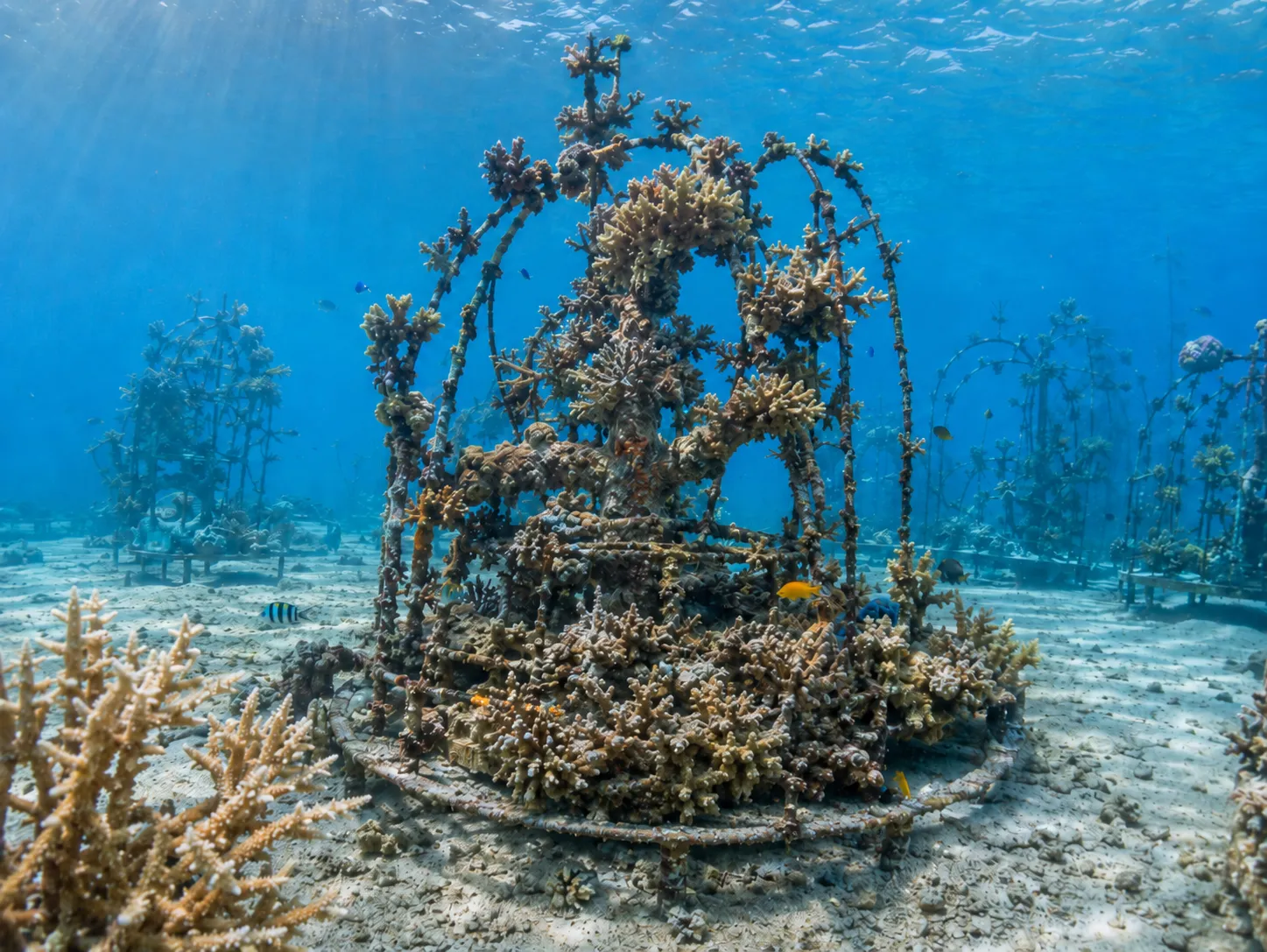
Gili Trawangan is a global leader in reef restoration thanks to Biorock technology. Steel structures are submerged and a low-voltage direct current is passed through them — accelerating coral growth to twice its natural speed.
This is community-funded. Participants in guided conservation snorkel tours contribute a minimum donation of IDR 100,000, which goes directly toward maintaining more than 100 structures off the island’s coast. Over the past 15 years, these artificial reefs have become thriving habitats for schools of fish and the island’s famous sea turtles. Explore Gilis includes reef snorkeling experiences in their island tour offerings for those who want a guided introduction to what’s underwater.
Human intervention can, in fact, repair what it once damaged. The biorocks are the clearest proof of that on Gili Trawangan.
Whether you snorkel or dive, you will likely swim past one of these structures without knowing it. Understanding what you are looking at changes the experience entirely.
Truth #5 — The Sunset Ritual: There Is a Spot Most Visitors Never Find
As the sun drops toward the horizon, the west coast transforms into a golden-hour sanctuary. The beach bars that line the strip each carry a different energy — some are loud and social, others are quiet and barefoot. If you want the combination of a premium sunset view and a comfortable base, Kokomo Gili T sits on the west coast with direct, unobstructed views over the water toward Bali.
But the island’s best-kept secret is elsewhere entirely.
The Maliboro Hill Viewpoint — Pro Tip:
- Hike 20 minutes inland to reach the only elevated spot on Gili T
- On clear days, you can see the sun setting directly behind Bali’s Mount Agung
- Arrive by 5:00 PM to secure your spot
- Bring water — the path is short but exposed
Most visitors spend their entire trip on the tourist strip and never know the viewpoint exists. It is one of those Gili Trawangan activities that costs nothing and stays with you longer than anything you could book. For guided sunset experiences that go beyond the obvious, Explore Gilis runs curated island tours that include viewpoints most tourists miss.
Truth #6 — Equine Welfare: The Cidomo Story Is More Complicated Than It Looks
The cidomo is charming. It is also one of the island’s most overlooked ethical considerations.
Gili T is not a natural horse environment. There is no pasture. The conditions are dusty and hot. Responsible operators make a significant difference — and they are worth seeking out before you hire a ride.
The best cidomo operators import specialized pellet feed from Java to supplement minerals and schedule bi-annual check-ups from international vets and farriers. The worst do none of that. The difference is visible if you know what to look for.
- Ask operators directly about feeding routines and veterinary care before booking a ride
- Avoid cidomo rides showing signs of overworked or visibly distressed animals
- If you prefer exploring the island on foot or by bike with a knowledgeable local guide, Explore Gilis offers island tours that cover the local side of Gili T responsibly
Choosing the right operator here is a small decision with a real impact.
Truth #7 — From Night Markets to Refined Garden Dining: The Food Scene Is a Bridge
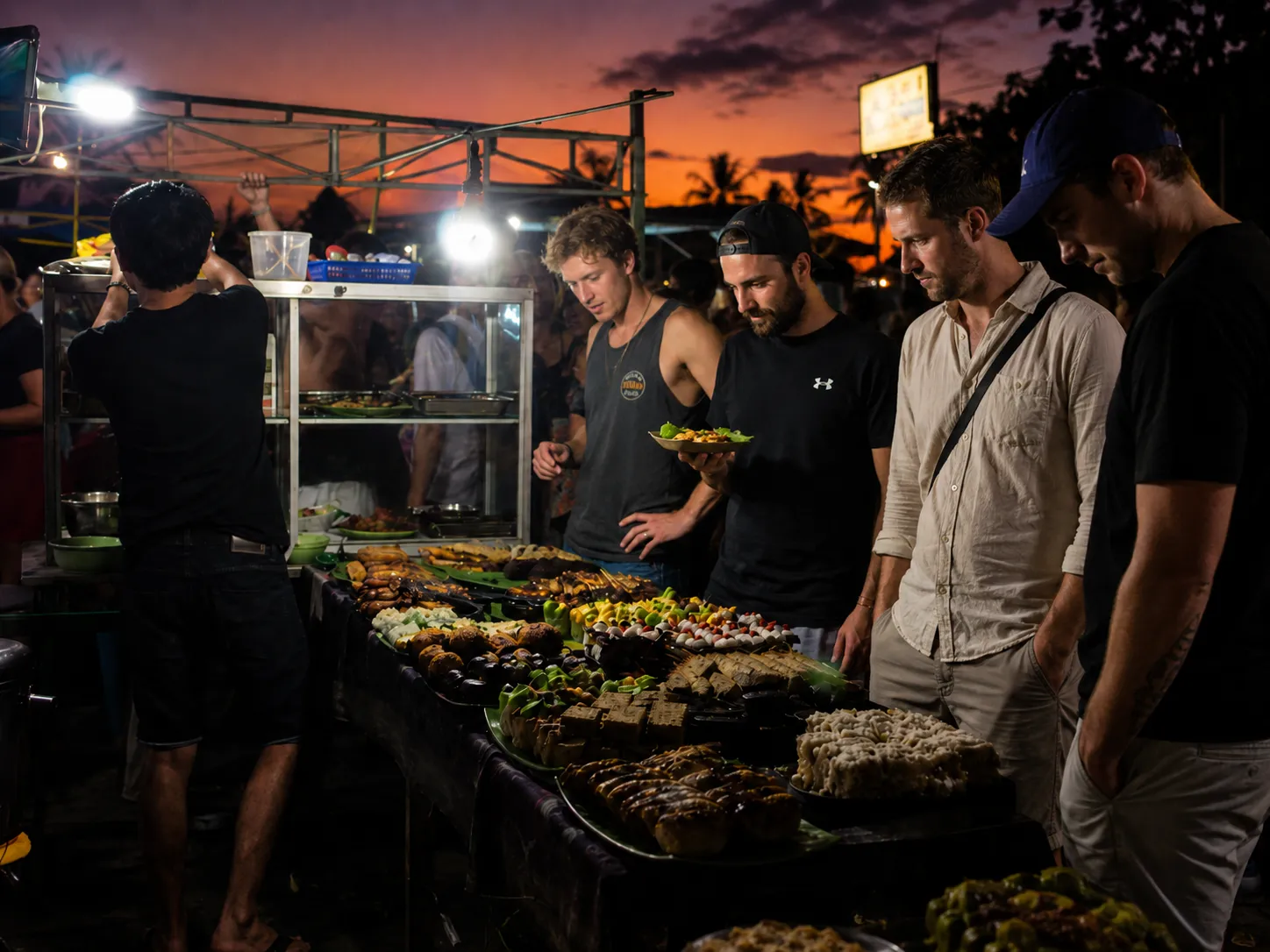
The culinary scene spans a wider range than most visitors expect — from IDR 25,000 local plates to resort-quality dining with ocean views.
- Local Value: The Night Market near the pier for nasi campur, satay skewers, and fresh grilled fish (IDR 25,000–60,000) — this is the soul of eating on the island
- Resort Dining: Kokomo Gili T offers a beachfront dining experience with quality ingredients and a setting that matches the food — worth it for a proper sit-down meal
- Food Tours: If you want to explore the island’s food culture with local context, Explore Gilis runs tours that include authentic local food stops most tourists walk straight past
The Night Market is where you understand the island’s soul. A beachfront dinner is where you understand why people extend their stay.
Planning Your Trip: Getting to Gili Trawangan
Understanding what to do on Gili T is step one. Getting there without unnecessary stress is step two.
The most practical route is a fast boat from Bali — either departing from Serangan (South Bali) or Padang Bai (East Bali), depending on where you are staying. You can review current departure times and pricing to find the best option for your schedule.
- Serangan is usually more convenient for travellers staying in Seminyak, Canggu, Kuta, or Nusa Dua
- Padang Bai offers a shorter sea crossing but a longer road transfer from South Bali
- Hotel pick-up service is available to simplify your transfer to the departure port
- Review safety standards before booking — not all fast boat operators operate to the same standard
For more detail on the crossing itself, read the full Bali to Gili Islands fast boat guide. If you have questions about routes, luggage, or group bookings, you can reach the team directly through official support.
Final Thoughts: The Paradox of Paradise
Gili Trawangan exists as a beautiful paradox. High-octane beach parties coexist with the silent work of coral restoration. The clip-clop of horse hooves serves as a constant reminder of a community’s refusal to give in to the “faster is better” mentality.
It is an island facing the harsh realities of tourism development head-on — inviting travellers not just to witness its beauty, but to participate in its survival.
The things to do in Gili Trawangan that stay with you are rarely the ones on the obvious list. They are the Friday afternoon cleanup that ends with a cold beer. The hilltop viewpoint with Mount Agung silhouetted at sunset. The biorock structure 3 metres underwater that has been slowly growing for 15 years.
In a world that rarely stops moving, Gili T asks a simple question: what can you learn from a paradise that refuses to start its engines?
Ready to See Gili Trawangan for Yourself?
Book your fast boat from Bali and arrive ready to go beyond the tourist strip.